
Lighting Up the Stream: Secrets of Professional Stream Lighting
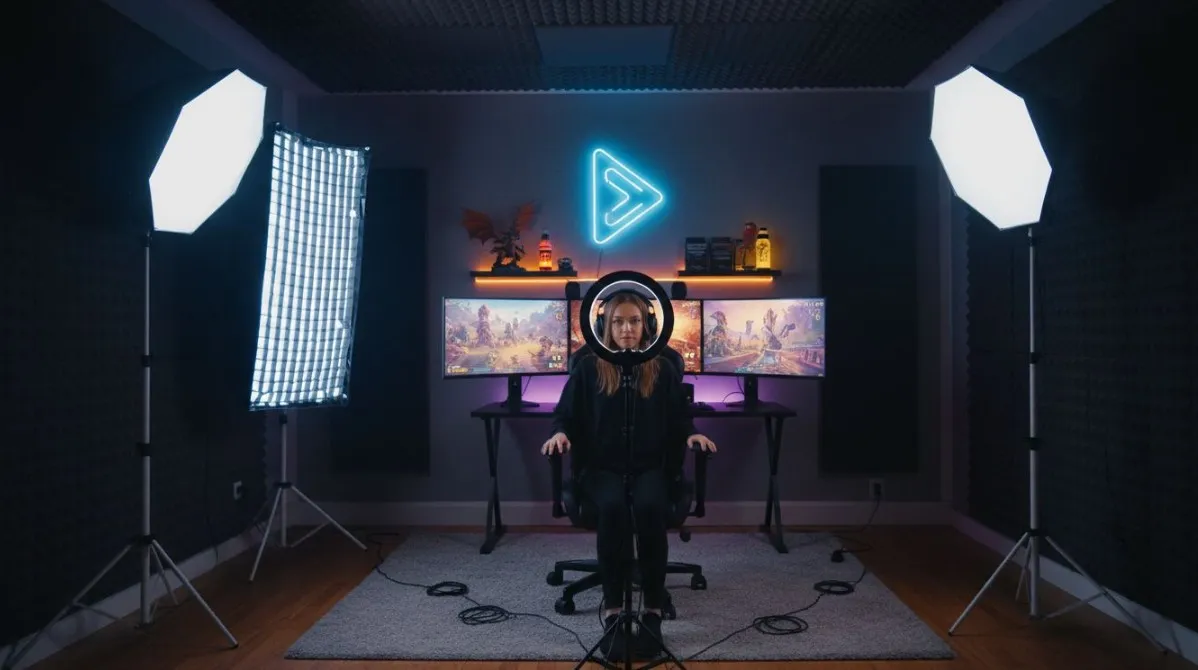
In the world of modern streaming, image quality plays a role no less important than the content itself. While a powerful computer and a good camera are the foundation, it is stream lighting that becomes the magical detail transforming an ordinary broadcast into a professional show. Properly configured lighting can not only improve the picture from your webcam but also create the right atmosphere, hide room imperfections, and capture viewers’ attention. This article is your in-depth guide on how to set up stream lighting, what types of streamer lighting exist, how to work with color temperature lighting, and what streamer lighting setups you can use to achieve the perfect visual effect.
Why is Lighting So Important for a Streamer?
Many aspiring streamers underestimate the role of light, focusing solely on camera resolution or bitrate. However, even the most expensive webcam cannot deliver a high-quality image in poor lighting conditions. Insufficient light leads to “noise” in the image, blurriness, dull colors, and distortion of facial features. Too bright or improperly placed light can create harsh shadows, glare, and discomfort for the eyes. Professional stream lighting solves these problems, making the image sharp, pleasant to the eye, and expressive, which helps to retain audience attention and create a more positive impression of the streamer.
Key Lighting Parameters: Understanding the Basics
To understand how to set up stream lighting, it’s crucial to grasp the basic characteristics of light sources. These parameters determine how light will behave on camera and what impression it will create.
Brightness and Intensity: Dosing the Light
Brightness, measured in lumens, is an obvious factor. Too little light results in a dark and noisy image. Too much light overexposes the frame, loses details, and makes the face appear flat. Optimal stream lighting should be sufficient for the camera to operate at low ISO values, minimizing noise, without creating overexposed areas. Many modern light sources feature brightness adjustment, allowing for precise intensity control.
Color Temperature: Warmth and Coolness of the Frame
Color temperature lighting is measured in Kelvins (K) and determines the “warmth” or “coolness” of the light. Lower values (2700K-3500K) correspond to warm, yellowish light, similar to an incandescent bulb. Mid-range values (4000K-5000K) produce neutral white light. High values (5500K-6500K) provide cool, bluish light, mimicking midday daylight. For the best lighting for streamers, it is often recommended to use neutral or slightly warm light (4500K-5500K), which looks natural and is pleasing to the eyes. The ability to adjust color temperature (bi-color light sources) offers greater flexibility.
Softness and Diffusion of Light: Eliminating Harsh Shadows
Hard light creates sharp, contrasting shadows and can accentuate facial imperfections. Soft, diffused light, on the other hand, smooths out shadows, making the image appear more voluminous and pleasing. Various diffusers are used to create soft light. For instance, a softbox for streaming is a specialized attachment for a light source that creates a large diffusion area. A ring light for streaming is a circular light source that evenly illuminates the face, minimizing shadows and creating characteristic catchlights in the eyes. Diffusers, made of fabric or plastic, are placed in front of the light source to soften it. Soft light is fundamental for creating a professional look on camera.
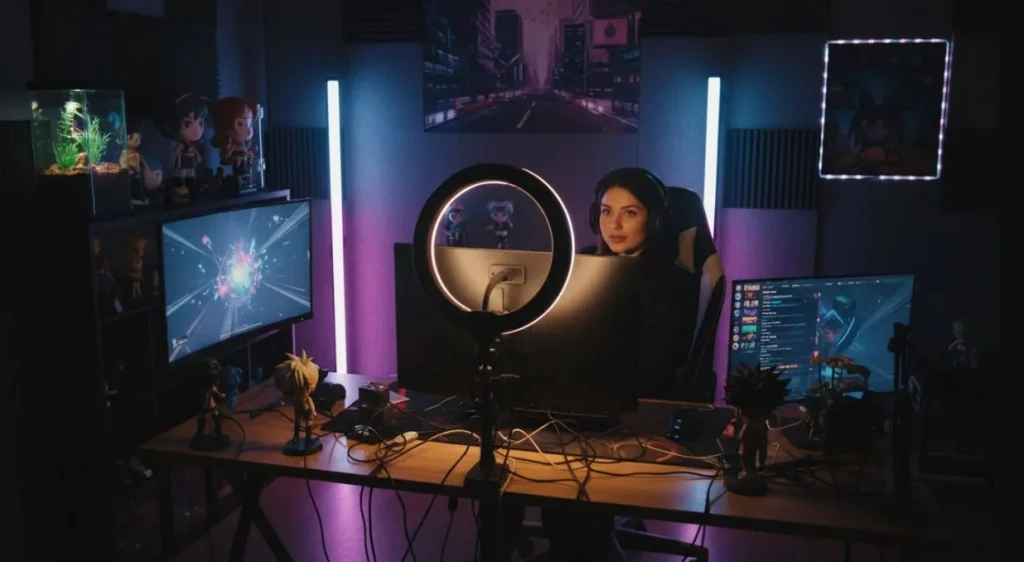
Types of Lighting Equipment for Streamers
The market offers many light sources, but some are particularly well-suited for streamers, providing an optimal combination of price, quality, and functionality.
Among the most popular options for webcam lighting are:
- Ring lights for streaming: A very popular choice, especially among beauty bloggers and streamers who prioritize even, shadow-free light and the “angelic eye” effect. They are compact and often feature adjustable brightness and color temperature.
- LED panels: Versatile light sources that can range from very compact to quite large. They are energy-efficient, have a long lifespan, and often come with adjustable brightness and color temperature. LED lighting for streaming allows for easy integration into any streamer lighting setup.
- Softboxes: A traditional solution in photo and video studios. They provide very soft and even light, ideal for high-quality visuals. However, they are more bulky and take up more space.
Lighting Setups: Creating Depth and Volume
To achieve the best results, it is recommended to use not one but several light sources, creating what is known as a streamer lighting setup. The classic three-point lighting scheme is the gold standard.
- Key Light: The main and brightest light source. It is positioned in front of the streamer, slightly to the side (at a 30-45 degree angle) and above eye level. It illuminates the face and is the dominant light.
- Fill Light: A less bright light source, positioned opposite the key light (on the other side), and serves to soften the shadows created by the key light. It makes shadows less harsh and fills them in, adding volume to the image.
- Back Light / Hair Light: Positioned behind the streamer, aimed at the head and shoulders. Its purpose is to separate the streamer from the background, create a sense of depth and a “hair highlight” effect, making the picture more dynamic and professional.
Using this streamer lighting setup, you can significantly enhance the quality of your broadcast. For beginners, it’s advisable to start with one good key light source (e.g., a ring light) and gradually add others.
Common Mistakes and Optimization Tips
Even with good equipment, improper setup can ruin the picture. Light directed straight into the face can create a flat image. Light from below creates unnatural shadows. Mixing light sources with significantly different color temperatures can lead to unnatural skin tones; aim to stick to one range. Harsh, direct light creates sharp shadows, so always use diffusers or reflectors. Also, do not ignore the background; it should also be adequately lit to avoid dark spots. Continuously experiment with light placement and intensity to find the ideal balance for your unique setup and room.
Conclusion
Professional stream lighting is not a luxury but a necessity for those striving for high-quality broadcasts and wishing to stand out from the competition. Understanding the principles of how to set up stream lighting, choosing suitable LED lighting for streaming or a ring light for streaming, and applying classic streamer lighting setups will allow you to achieve impressive results. Investing in the best lighting for streamers pays off by increasing audience engagement and creating a more attractive and memorable image. May your broadcast always be bright and professional!